Menu and volume
List the meals, busiest service period, preparation tasks and staff who will use the temporary kitchen. Request the layout and equipment list for the unit offered.
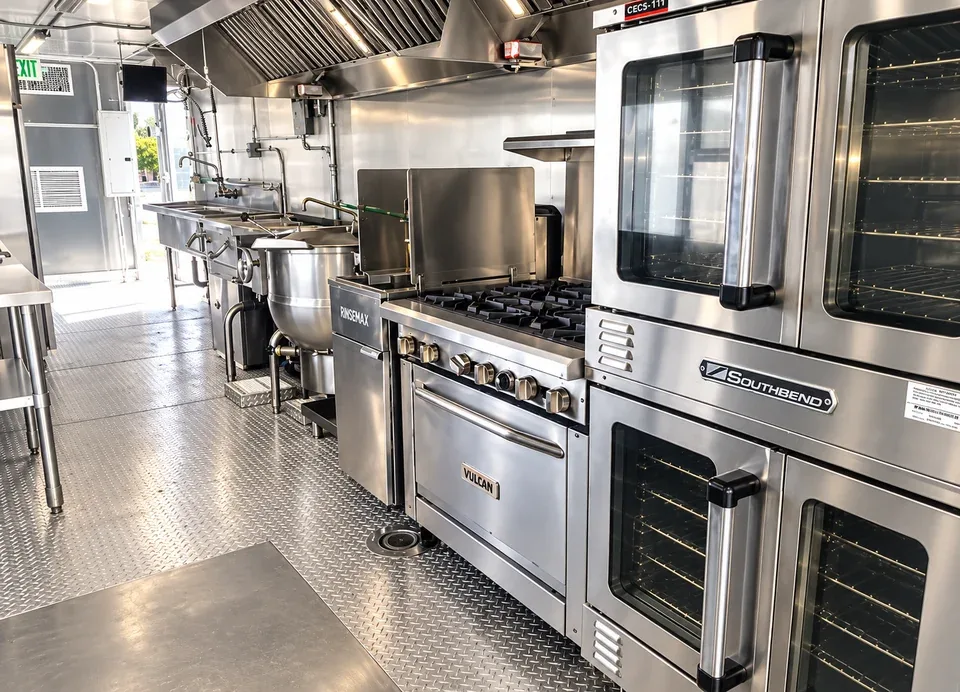
Plan a temporary commercial kitchen in Inglewood, California around your menu, meal volume, site access and dates. The local example below shows one situation to discuss with FFM; the actual trailer, delivery route and price are confirmed for your project.
01 / Los Angeles County · South Bay / Westside
Hypothetical rental example. This is not an FFM customer or completed deployment.
A contractor supporting a future Inglewood mobility or streetscape work phase could ask about a temporary workforce kitchen at an approved off-street location. Share crew shifts, meal volume, truck access and the construction traffic plan; do not place equipment in an active work zone without permission. A separate refrigeration request can be scoped around the menu and available power. This scenario does not describe the project contractor or an FFM job.
The Inglewood Transit Connector's current Phase 1 project site describes downtown mobility hubs, Market Street streetscape upgrades and event-day bus lanes, with completion scheduled for spring 2028. As of October 2026, the site says Phase 1 construction begins in November. Its current project updates—not older four-hub or $287.5 million descriptions—should guide any planning; this is not an FFM contract.
Additional source: City of Inglewood: Transit Connector project oversight ↗
02 / Equipment plan
Ask the project owner for the current construction phasing, approved staging address and access hours before estimating service. Map the route away from controlled work areas, then check turning space, overhead clearance, worker entry, power, water, wastewater and meal-break timing. Confirm current equipment, delivery availability and price for the exact address; event-day traffic plans can change the route.
For a future Inglewood construction phase, use the contractor's current logistics plan to select an approved off-street staging point beyond controlled work areas. Estimate crew meals by trade and shift, then provide the menu, operating window, delivery gate, vehicle dimensions and worker route. Check turning radius, overhead clearance, construction traffic controls, power, potable water, wastewater, fire access and the distance to the meal area. The project site currently describes Phase 1 work and changing street conditions; confirm the latest closures and quote equipment for the actual address and schedule.
Compare mobile commercial kitchen trailer layouts ↗List the meals, busiest service period, preparation tasks and staff who will use the temporary kitchen. Request the layout and equipment list for the unit offered.
Share the exact address, a site plan and photos of the approach. Confirm trailer turning space, level placement, staff access and the route between the kitchen and serving area.
Review power, potable water, wastewater, grease handling, ventilation clearance and any approvals before the permanent kitchen goes offline.
03 / Site checklist
Identify a safe equipment position and the utilities actually available at your address. Give the team the length and width of the proposed pad, any gate or overhead restrictions, and the distance to the serving point.
Ask California and local food-service reviewers which permits and inspections apply. Delivery, connections and equipment availability are quoted for your exact site and dates.
04 / Published starting rates
These published starting prices help frame a Inglewood project. Your written quote confirms the available trailer, rental period, delivery route and site work.
Starting price per rental. The rental period, minimum term, delivery and pickup charges are confirmed in your written quote. Call 866-216-4676.
05 / Supporting equipment
Quote refrigeration separately against the food volume, target temperatures and available power. Confirm delivery access during the construction phase and a safe loading path for staff. Do not assume a shower, restroom or generator option; verify inventory, placement and servicing in writing.
Review the refrigeration trailer and cold-storage options for the stock in this plan. Confirm chilled or frozen operation, storage volume, electrical supply, loading access and the temperature controls of the actual unit quoted. Ask for a written starting-price quote for the required configuration; the rental period and all delivery or pickup charges are confirmed there.
If the existing wash area also closes, ask about a commercial dishwashing trailer. Share the busiest tray and pan return period, the sanitation method, hot-water source and wastewater plan. Request its starting price and rental terms in writing.
Start with the cooking space your operation needs. Add washing, cold storage or crew facilities where the existing site cannot support the work.
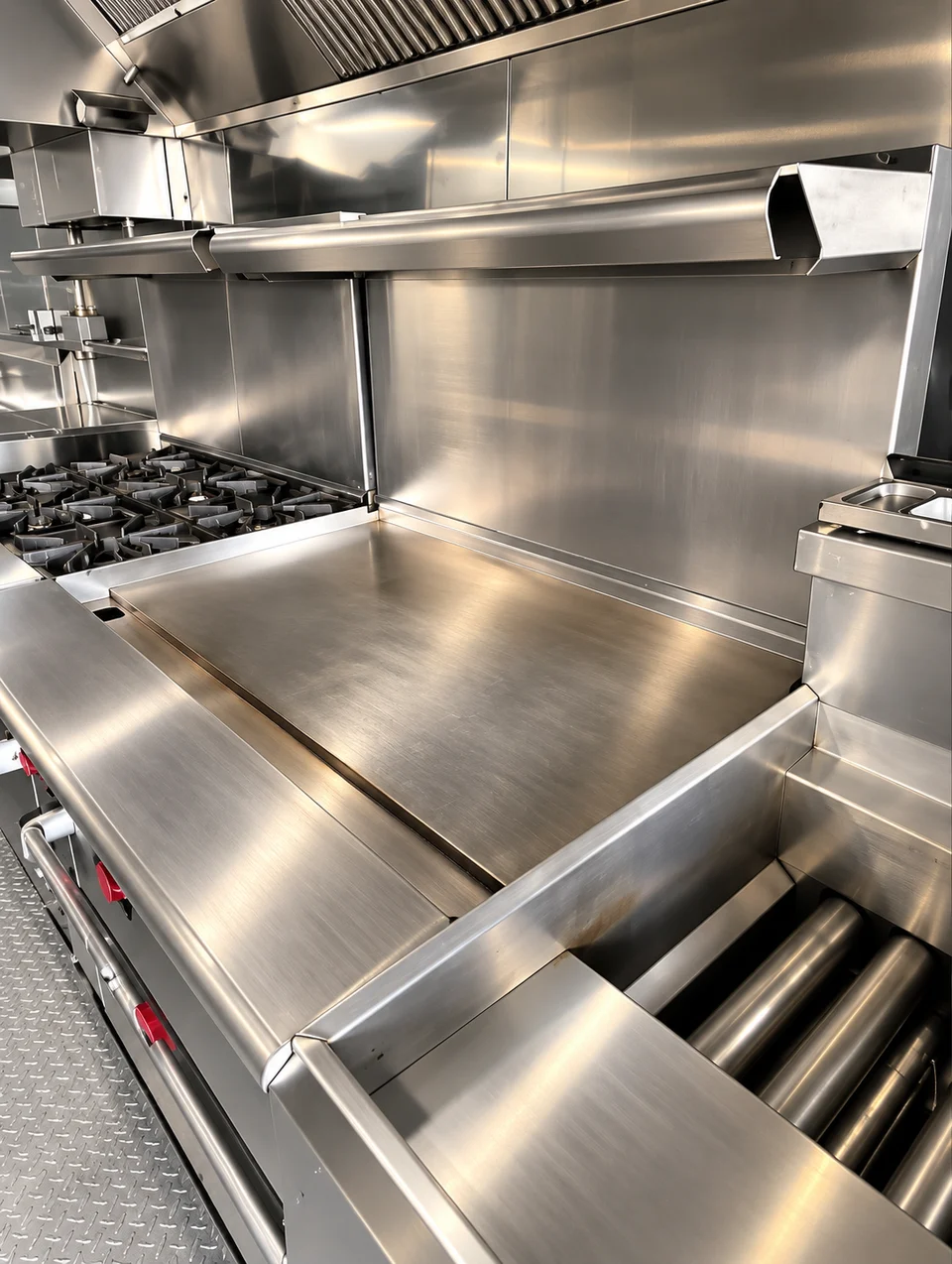
Plan temporary cooking, preparation and service space during a renovation, construction project or kitchen closure. Match the proposed layout to your menu, busiest meal period, delivery access, power, water and wastewater.
Explore kitchen trailers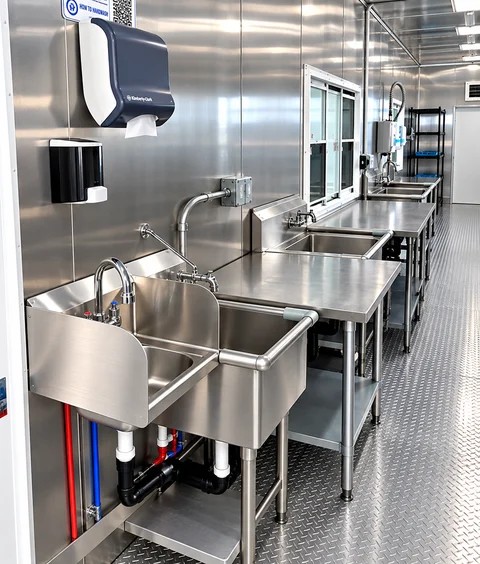 KITCHEN SUPPORTDishwashing trailersKeep dish handling in the site plan. Review wash volume, clean and dirty routes, water and drainage.Explore dishwashing
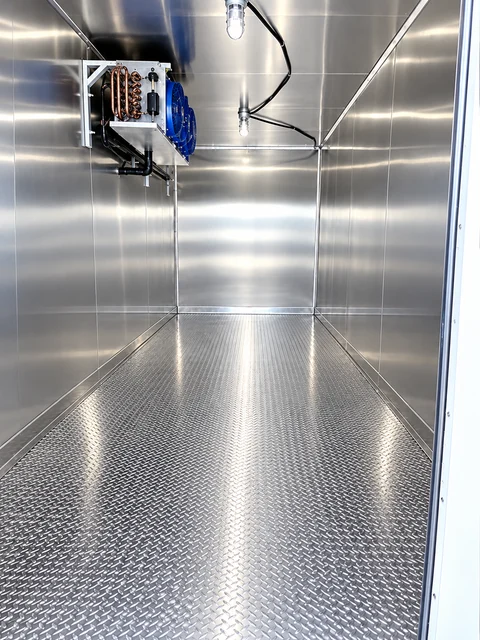 KITCHEN SUPPORTRefrigeration rentalsDiscuss cooler, freezer, trailer or container needs by temperature, stock volume, loading and power.Explore refrigeration
Choose the topics relevant to your site; confirm the available unit and connections in your quote.
LOCAL SCENARIOS · INGLEWOOD
These Inglewood examples are hypothetical rental scenarios, not FFM customer jobs. The workbook supplies local context and source links; confirm current dates, site rules and details before planning.
This Inglewood rental scenario is hypothetical and does not describe a confirmed FFM customer or deployment.
Inglewood planned to break ground in October 2026 on the $287.5 million Inglewood Transit Connector, a shuttle network with four transit hubs, including a five-level, roughly 1,000-space parking structure at Market Street and Florence Avenue. It is set to launch in April 2028, in time for the Olympics. For example, a contractor on a downtown transit build like this could feed crews from a mobile kitchen trailer set up as a temporary workforce kitchen, with a refrigerated trailer and a shower combo trailer. Stadium-district caterers could use an event kitchen trailer on game days for crowds from Hawthorne and Westchester.
Sept 2026 (LAist): $287.5M Inglewood Transit Connector shuttle network; groundbreaking planned for the following month; four hubs incl. a 5-level, ~1,000-space garage at Market St & Florence Ave; service slated for April 2028. (Context only: the scenario does not describe the City of Inglewood or its contractors.)
Next step
Send the address, dates, menu, peak meal count and site photos. FFM can review a suitable configuration and prepare a project-specific quote.