Mobile commercial kitchens
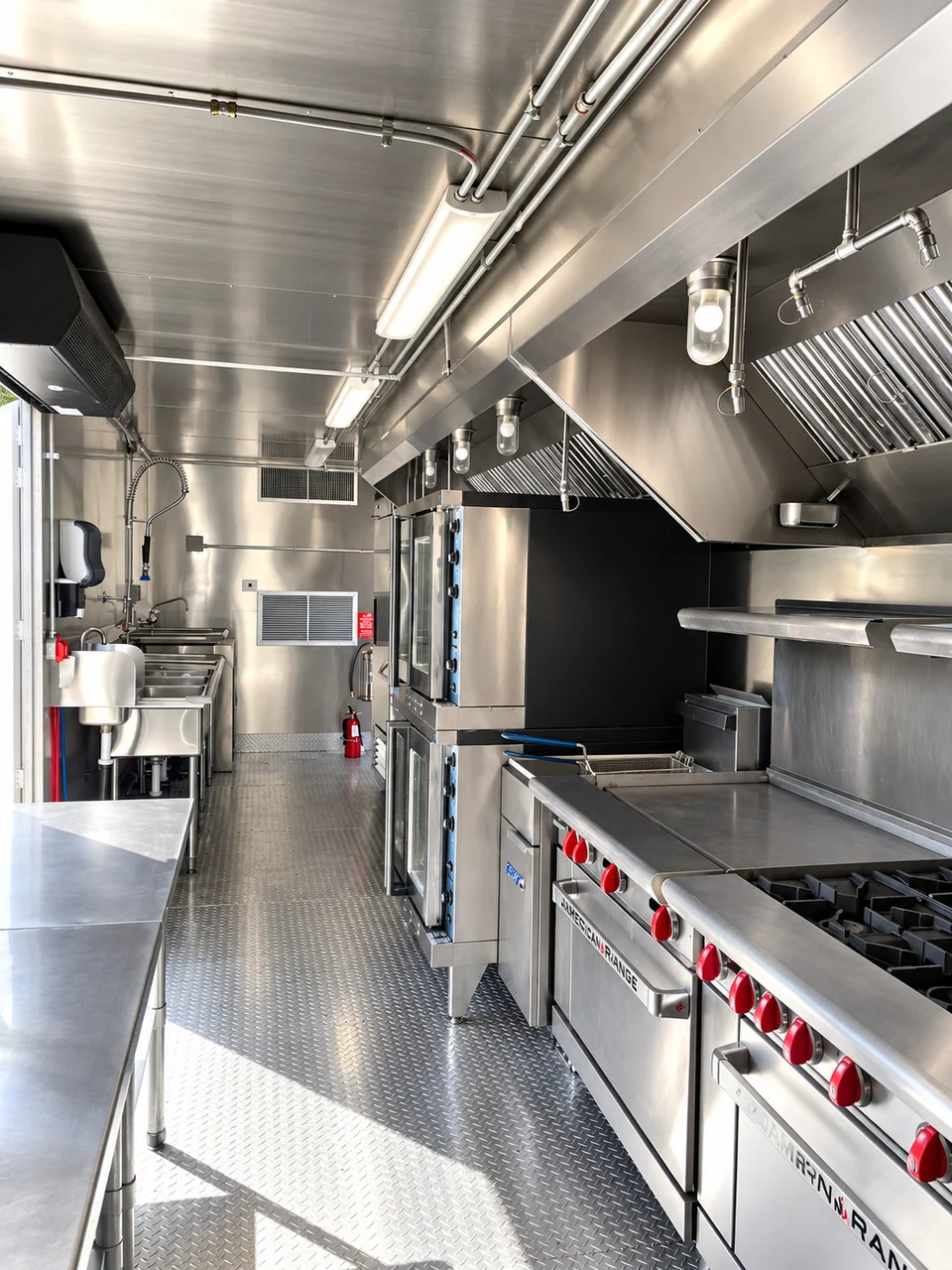
Keep preparing meals while the permanent kitchen is closed. Compare the cooking line, prep space and serving route against your menu and busiest meal period.
Explore kitchen trailers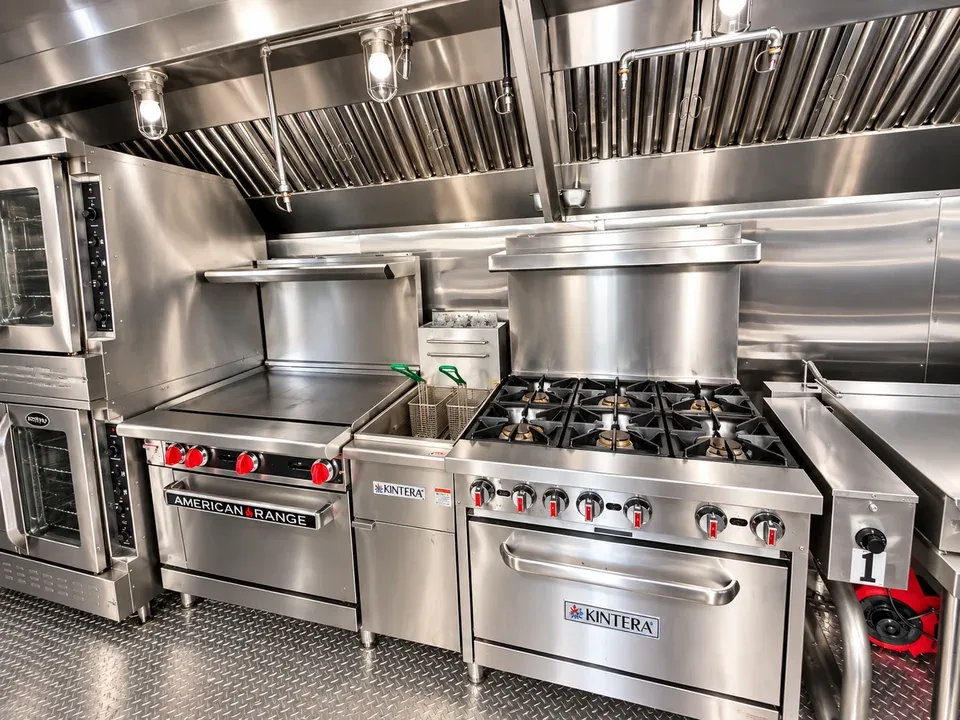
Healthcare · Education · Hospitality · Government & Corrections · Construction & Industrial
California hospitals face a 2030 seismic deadline, wildfire recovery is still underway in Los Angeles County after January 2025, and school and university kitchens are always mid-rebuild somewhere between Eureka and San Diego. When a kitchen has to close, Commercial Food Facility Management USA provides mobile commercial kitchen trailer rentals across California, from Los Angeles and San Diego to San Francisco and Fresno. Each portable kitchen trailer arrives with a cooking line, prep space, sinks, an exhaust hood and fire suppression, so a temporary commercial kitchen can run onsite beside your building. Rent short term for a repair or a busy season, or lease a modular kitchen for months during construction or a phased renovation.
Five industries lean on our California kitchen trailer rentals and leasing:
Commercial dishwashing is the second thing to go when a kitchen closes. Our dishwashing trailer rentals in California carry a low-temp dishmachine, a high-temp dishmachine or a conveyor belt dishmachine for high volume, and we can check flight-type and flight-type high-temp machines on request. Rent a portable dishwashing trailer short term for an emergency in Eureka, or lease one long term during construction or renovation, delivered with the kitchen trailer.
If a walk-in freezer or walk-in cooler goes down in Fresno, treat it as an emergency: portable refrigeration from $1,495 keeps inventory cold in a refrigerated trailer or refrigerated container. For wildfire-recovery, utility and oil-field crews from Eureka to Bakersfield, add mobile shower and restroom combination trailers (ADA available), shower trailers, bathroom trailers, laundry trailers, bunk bed trailers and a remote man camp basecamp with workforce housing for industrial cleanup, short or long term.
If a wildfire, an earthquake or a public safety power shutoff shuts your kitchen down, plan the mobile kitchen, dishwashing and refrigeration together as one emergency setup. Kitchen trailers start at $4,995, and delivery anywhere in California is priced by trailer length, from $995 for a 20 ft unit. Call 866-216-4676 with your California address, dates and meal count.
LOCAL REFRIGERATION PLANNING
Explore refrigeration and kitchen support planning for California festivals, major events, coastal storms, wildfire recovery, power shutoffs, fire rebuilds, infrastructure work, harvest and renovation. Each example pairs a hypothetical situation with local context and equipment to assess.
These are hypothetical planning scenarios based on real California locations and local context. They do not describe actual customer incidents or completed FFM rentals.
An Indio caterer feeding artists, crews and VIP areas across two festival weekends needs far more cold storage than its kitchen has, with daytime desert heat working against every cooler. Refrigeration trailers on site hold food and drinks between weekends, and an event kitchen trailer gives chefs a full prep line backstage.
Coachella 2026 ran over two weekends, April 10–12 and April 17–19, at the Empire Polo Club in Indio.
A Sacramento food vendor at the State Fair finds its coolers can't hold temperature during a 100-degree weekend. A refrigerated trailer behind the booth keeps restocks safe, and a mobile kitchen trailer adds a cooler, enclosed prep space for the hottest days.
The 2026 California State Fair ran 17 days and drew more than 650,000 visitors. Temperatures topped 100°F on the final weekend, and organizers are moving the fair to September starting in 2027 to avoid peak summer heat.
A Santa Clara caterer books several corporate hospitality events during championship game week and needs extra cold storage and kitchen space near each venue. Refrigeration trailers hold food and beverages, and a portable kitchen trailer lets the team finish dishes on site.
Super Bowl LX was played Feb 8, 2026, at Levi's Stadium in Santa Clara, which seats about 68,500 for NFL games and adds temporary seating for the Super Bowl. Around 90,000 visitors were expected in the Bay Area, according to KQED.
A restaurant in a low-lying coastal San Diego neighborhood moves its inventory out ahead of a tropical storm. A refrigeration trailer on higher ground holds the stock, and if water reaches the kitchen, an emergency kitchen trailer keeps the business serving while it's cleaned and inspected.
San Diego was placed under a tropical storm watch for Tropical Storm Rachel (Oct 9–11, 2026), only the second on record after Hurricane Hilary in 2023. More than an inch of rain fell, about double the usual October total, and the city prepared for flooding in Midway, Mission Beach and other coastal areas.
A senior living community returns after a wildfire evacuation to find smoke contamination in its kitchen. An emergency kitchen trailer serves residents while the kitchen is professionally cleaned, and a refrigeration trailer holds replacement stock.
The Norte Fire started Oct 16, 2026, in San Clemente and spread into San Juan Capistrano. About 16,000 residents were evacuated and at least six homes were damaged or destroyed; most evacuation orders were lifted the next evening.
A Grass Valley restaurant gets notice of a two-day safety power shutoff. A generator-ready refrigerated trailer delivered the day before keeps its inventory cold, and a commercial kitchen trailer lets it keep serving through the outage.
PG&E shut off power to about 9,500 customers in Northern California on Sept 12–14, 2026, because of gusty winds, low humidity and elevated fire danger. Affected counties included Nevada, Placer, El Dorado and others in the Northern Sierra and Sacramento Valley.
A builder running several home rebuilds in the same neighborhood wants on-site meals for its crews, since few roads serve the area and lunch runs eat into the workday. Modular kitchen trailers set up as a temporary workforce kitchen serve crews from one central lot, and a refrigerated trailer stores bulk food.
The January 2025 Palisades Fire burned 23,448 acres. By January 2026, Mayor Karen Bass said more than 400 homes were under construction, with hundreds more approved. Only a couple of major roads serve the area, which complicates construction.
A contractor working a long stretch of rail construction near Fresno needs to feed crews at work sites far from town. A mobile kitchen trailer moves with the work as a temporary workforce kitchen, and refrigerated trailers keep bulk food cold in Central Valley heat.
California High-Speed Rail has created more than 16,400 construction jobs, with 119 miles under construction in the Central Valley and track laying set to begin in 2026, according to the California State Transportation Agency (April 2026).
A Salinas Valley produce shipper's cooling facility goes down at the height of lettuce harvest, with trucks loading daily. Refrigerated trailers on site hold harvested greens at temperature until repairs are done, and a commercial kitchen trailer can serve as a temporary workforce kitchen for harvest crews on long shifts.
Monterey County's 2025 crops were worth about $4.8 billion. Lettuce made up 33% of that value, with leaf lettuce alone at $1.001 billion, according to the county crop report released in July 2026.
A campus dining operator closes a busy dining hall for a kitchen renovation but still has to feed students in that part of campus. A modular kitchen trailer keeps hot food service going nearby, and a refrigerated trailer stands in for the walk-in during construction.
UC San Diego closed its Pines and Roots dining facility in March 2026 for a renovation of back-of-house areas, kitchen equipment and HVAC, with reopening planned for Fall 2026. Muir College dining service was suspended during the work. (Context only: the scenario does not describe UC San Diego.)
For your California project, start with the kitchen work that needs to continue. Add supporting equipment where existing facilities will be unavailable.
Keep preparing meals while the permanent kitchen is closed. Compare the cooking line, prep space and serving route against your menu and busiest meal period.
Explore kitchen trailers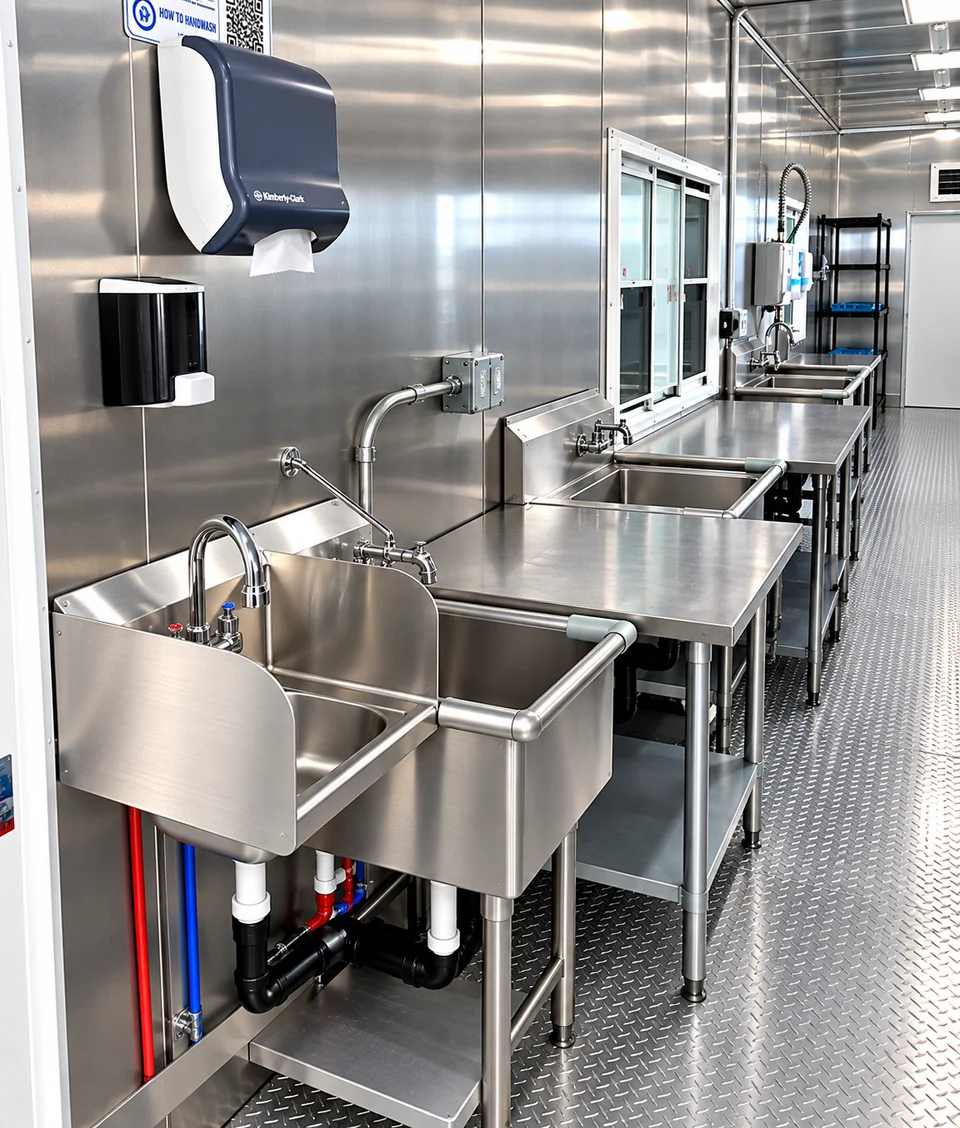
Keep clean dishes moving back into service when your wash area is unavailable. Plan the dirty return, washing and clean storage around the kitchen workflow.
Explore dishwashing trailers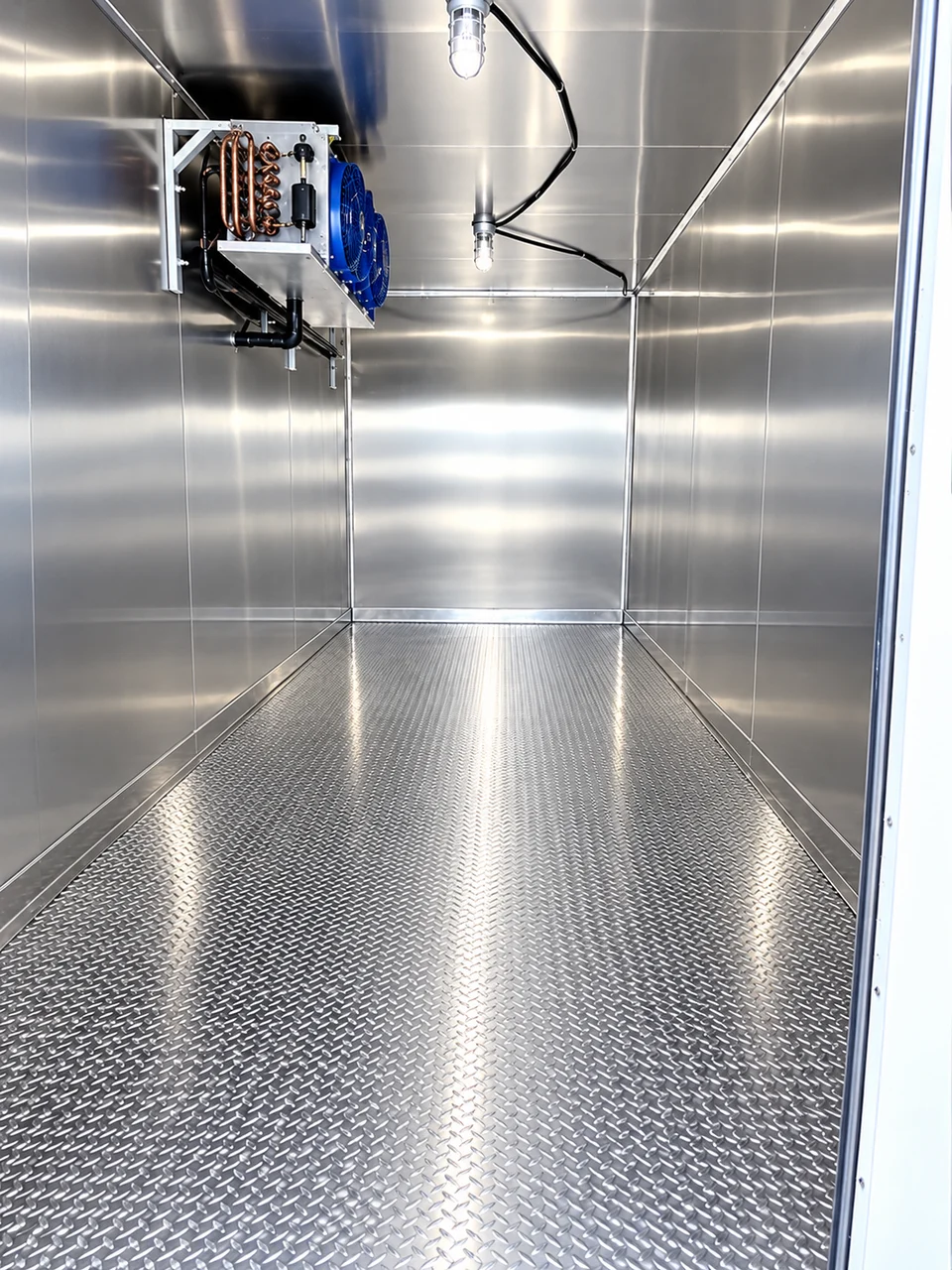
Arrange temporary chilled or frozen storage when a walk-in fails or construction removes existing space. Include receiving access and the busiest stock period.
Explore refrigerationReference equipment photographs. Models, layouts and availability are confirmed for your project.
A kitchen rental may be one part of the site plan. Review these crew facilities when the project also needs washing, restrooms, laundry or accommodation.
Choose the topics relevant to your site; confirm the available unit and connections in your quote.
A temporary commercial kitchen plan starts with the meals that must continue while builders replace the permanent facility. Hospital tray service, campus dining and restaurant production each need a different cooking layout and transition schedule. These California scenarios connect six cities with mobile kitchen rental planning, from menu requirements to installation and removal. They are illustrative situations; the actual equipment, site suitability and delivery arrangements need confirmation.
Choose the situation closest to your operation, then open the city page to organize the address and rental requirements. The linked use-case guides explain the workflow in more detail. Begin with the kitchen functions displaced by construction and the meals required during each phase.
For a hospital renovation in Los Angeles, separate preparation, cooking, patient tray assembly and service before selecting equipment. Identify which tasks can remain indoors and which need a temporary kitchen. Facilities and foodservice staff should map the route from the proposed trailer position to the receiving and service entrances.
A mobile commercial kitchen trailer needs a cooking line matched to patient menus and production peaks. Check working space for the people preparing meals, dietary procedures and cart movements. Coordinate utility connections and inspections with the contractor before the permanent kitchen closes. Include staff familiarization and a staged return to the rebuilt kitchen in the construction schedule.
A restaurant planning work in San Francisco can start with the dishes it expects to serve during the remodel. Compare the required cooking methods with the proposed portable kitchen configuration. A temporary menu should reflect preparation space, appliance capacity and the route between cooking and table service.
The San Francisco DPH plan-review application (PDF) includes remodels and asks about cooking, cooling food and washing ingredients. Use those questions alongside our restaurant kitchen renovation guide to prepare the operating brief. Ask the responsible reviewers about the temporary arrangement before agreeing on a reopening date. Confirm where staff enter, ingredients arrive and finished meals leave the kitchen while contractors work.
For a school cafeteria project in Fresno, compare building work with the days students and staff need meals. Breakfast, lunch and summer programs may require different production peaks. Specify whether the temporary kitchen will cook complete meals or finish food prepared elsewhere; enrollment alone does not define the equipment.
Lay out preparation benches, cooking stations and the route to the serving area around the actual menu. Keep kitchen deliveries and contractor vehicles separate from student circulation in the site plan. Identify a commissioning window before meal service starts, and build a construction-delay contingency into the rental discussion. The temporary kitchen should remain usable until the permanent facility is ready for its planned handover.
A workplace or institutional project in Riverside may keep serving meals as construction moves through successive kitchen areas. Record which preparation and cooking functions disappear during each phase. Size the temporary operation around its busiest required service period and the menu it must produce.
Compare service hours with contractor access and choose a proposed placement area that remains accessible throughout the work. Ask whether a mobile or modular kitchen arrangement suits the footprint, duration and utility plan; confirm the configuration offered. Identify any connection changes before construction begins. A phase-by-phase schedule also helps establish servicing windows, extension terms and the sequence for returning cooking operations to the building.
An urgent hood, plumbing or cooking-line repair in San Diego begins with identifying safe access and usable utilities. Establish which meals must continue, which appliances the menu needs and where staff could prepare food while repair contractors work. A temporary kitchen proposal must fit those conditions.
Our emergency kitchen planning guide helps organize the first equipment discussion. If power is interrupted, San Diego County’s power-outage guidance (PDF) says food preparation should stop until power is restored and notes that kitchen ventilation also stops. Confirm safe connections, the required approvals and an available kitchen before committing to a restart date. See San Diego event, outage and construction examples for local planning context. Plan how cooking will transition back when repairs finish.
For a campus dining project in Eureka, use the academic calendar and meal schedule to define temporary cooking requirements. A weekday lunch program and residential dining can need different preparation hours, staffing and appliance combinations. Locate the proposed kitchen, delivery point and meal service route on the construction plan.
The university dining renovation guide provides a framework for meal periods, dietary workflows and service transitions. Compare the selected kitchen’s layout with those requirements, then schedule installation before the existing cooking area closes. Include maintenance access, a named site coordinator and a fallback for delayed building work. Confirm the rental period and removal window around the campus handover schedule.
These public-source examples show how events, outages and construction can affect food service around San Diego. They are planning references, not records of FFM projects or customer relationships. Confirm equipment, site suitability, approvals and delivery timing for each address.
Prepare an appliance schedule for the temporary commercial kitchen: cooking methods, preparation stations, holding requirements and meals per service period. Ask for the proposed unit’s floor plan, included appliances and connection specifications. Confirm working space for staff and food movement. Reference photographs help explain options but do not establish the configuration available for your dates.
Discuss portable or mobile kitchen rental for the shutdown period, and ask whether a modular arrangement or longer-term leasing option is offered for extended construction. Compare installation, servicing, extension and removal responsibilities in the written scope. Plan a working handover before the permanent kitchen goes offline.
When construction closes the wash area, a commercial dishwashing trailer rental may support the cooking operation. List plates, trays, utensils and cookware, then estimate returns during the busiest service period. Plan receiving, scraping, washing, drying and clean storage as a sequence. Confirm separation between used items and the route carrying clean ware back to the kitchen.
Sanitizing method and machine format are separate decisions. Hobart’s dishmachine guidance explains that high-temperature machines sanitize with hot water, while low-temperature machines use chemical sanitizer. Confirm the selected machine’s operating instructions, water requirements, chemical supply and monitoring arrangements. Do not assume that every trailer uses the same method or utility connections.
For format, Stero’s warewashing education guide distinguishes rack conveyors, which move loaded racks through the machine, from flight-type systems, which use a rackless conveyor. These terms describe how ware travels through the equipment. Ask which format is actually available and appropriate for the items, volume and placement area; a manufacturer’s product description does not establish FFM inventory.
Before booking, compare the proposed unit’s power, water, drainage and ventilation needs with the site. Confirm loading direction, worktables, staff circulation, cleaning responsibilities and service access. Include chemical replenishment where applicable and a plan for faults during meal service. Review the wash setup with the kitchen team so clean pans and utensils return when the next production period needs them.
For a proposed flight-type high-temp dishmachine, review the rackless loading system and hot-water sanitizing requirements together. Discuss short-term portable dishwashing rental or longer-term trailer leasing around the renovation schedule and construction phases.
If a commercial cooler or freezer fails, discuss emergency refrigeration rental for the affected food storage. Identify chilled or frozen requirements, stock volume, safe loading access and usable power. Ask which walk-in cooler, freezer or refrigerated container configuration fits. Confirm the available unit, connections, temperature monitoring and delivery timing. Follow the responsible authority’s food-safety direction when assessing affected stock. Coordinate the repair and transfer schedule with the kitchen manager, and confirm removal after the permanent equipment is working again.
Send the address with a marked site plan showing the kitchen position, approach, gates, overhead restrictions and building entrances. Include delivery-hour restrictions and construction staging. The selected trailer must be assessed against the actual route and placement area; a city name alone does not establish access.
Identify electrical service, potable water and wastewater arrangements, then compare them with the chosen kitchen’s specifications. Agree who handles site preparation, connection work and ongoing servicing. Keep access available for inspections, maintenance and removal as construction progresses.
The FDA state retail-food directory provides a starting point for California guidance. Confirm the reviewing authority and applicable food-facility, fire, building or temporary-structure reviews for the address and operating model. Discuss the kitchen layout before fixing the opening date.
A short repair may need a limited menu. A long renovation needs a plan for daily production, maintenance and changing construction phases. Discuss short-term rental, longer-term terms or leasing where offered, including extensions and removal timing.
The city pages help organize an inquiry. Confirm the kitchen configuration, dates and exact-address delivery with the team. Share site access and utility details early so the proposed setup can be assessed.
Provide the construction purpose, menu, meals per service period, dates, address and site contact. Explain which cooking functions need replacement. Add site photographs and connection details to the California kitchen rental inquiry.
Choose FFM for a rental conversation built around your California project.
Your menu, site and construction schedule belong in the same plan. We help you work through those details before choosing temporary equipment.
Talk through your project: 866-216-4676Tell us your menu, meal counts and service times. We use those details to discuss a temporary cooking layout and the equipment your operation needs.
A kitchen closure can also affect dishwashing and refrigeration. Bring all three needs into the same conversation so the proposed layout accounts for receiving, preparation and service.
Share the entrance, placement area and available utilities. Our team can review the proposed equipment against those details and identify the setup questions to resolve before booking.
Ask for equipment, rental dates, delivery, setup, servicing and pickup in the project quote. Clarify extensions and customer responsibilities before you commit to the arrangement.
Share the menu, meals per service period, equipment affected and requested dates. Explain whether the work is planned or an emergency.
Work through the proposed layout, delivery entrance, placement and connections. Identify the people responsible for site preparation and local approvals.
Review availability, rental or lease terms, transport, setup and pickup together. Agree the scope and receiving contact before booking the delivery.
CALIFORNIA SERVICE AREA
Open a local kitchen planning page, then confirm equipment and delivery for your address.
Bring your menu, meal counts, equipment needs and dates. Share the exact site so our team can review availability, setup and pricing together.
Share your project location, operating dates and meal-service needs. Ask the team to confirm the right kitchen configuration, setup scope and a quote.
866-216-4676 ↗