Plan the kitchen around the operation, then confirm the equipment and site details.
Identify what caused the outage and what remains usable
Start with a clear description of the affected equipment and spaces. A small equipment failure may need a different solution from a fire or flood that damages utilities and access. Do not place a trailer into an unsafe or restricted area. The facility's responsible team should establish when a proposed location can be accessed and who may authorize work there.
Record whether existing refrigeration, dry storage, serving lines, dishwashing and dining spaces can continue. If some functions remain usable, the temporary kitchen may only need to replace specific production steps. If the whole operation is offline, include receiving, food storage and waste management in the replacement plan.
The first-day planning sequence
The useful first-day milestone is a decision-ready project brief. Assign an on-site contact who can answer questions about safety, access and utilities. Share the exact address, photos or a site plan if available, the meals that cannot be missed, and the earliest date a safe setup could be accepted.
The next step is to discuss an available trailer configuration and the separate work needed for delivery, placement, connections and approvals. These steps may run in parallel, but their order and duration depend on the site. Do not use an hour-by-hour example from another project as a response commitment.
- Confirm site safety and who controls access
- Prioritize meal periods, menus and people served
- List working power, water, wastewater and cold storage
- Identify an accessible trailer location and delivery route
- Ask who handles local reviews, connection work and operating approval
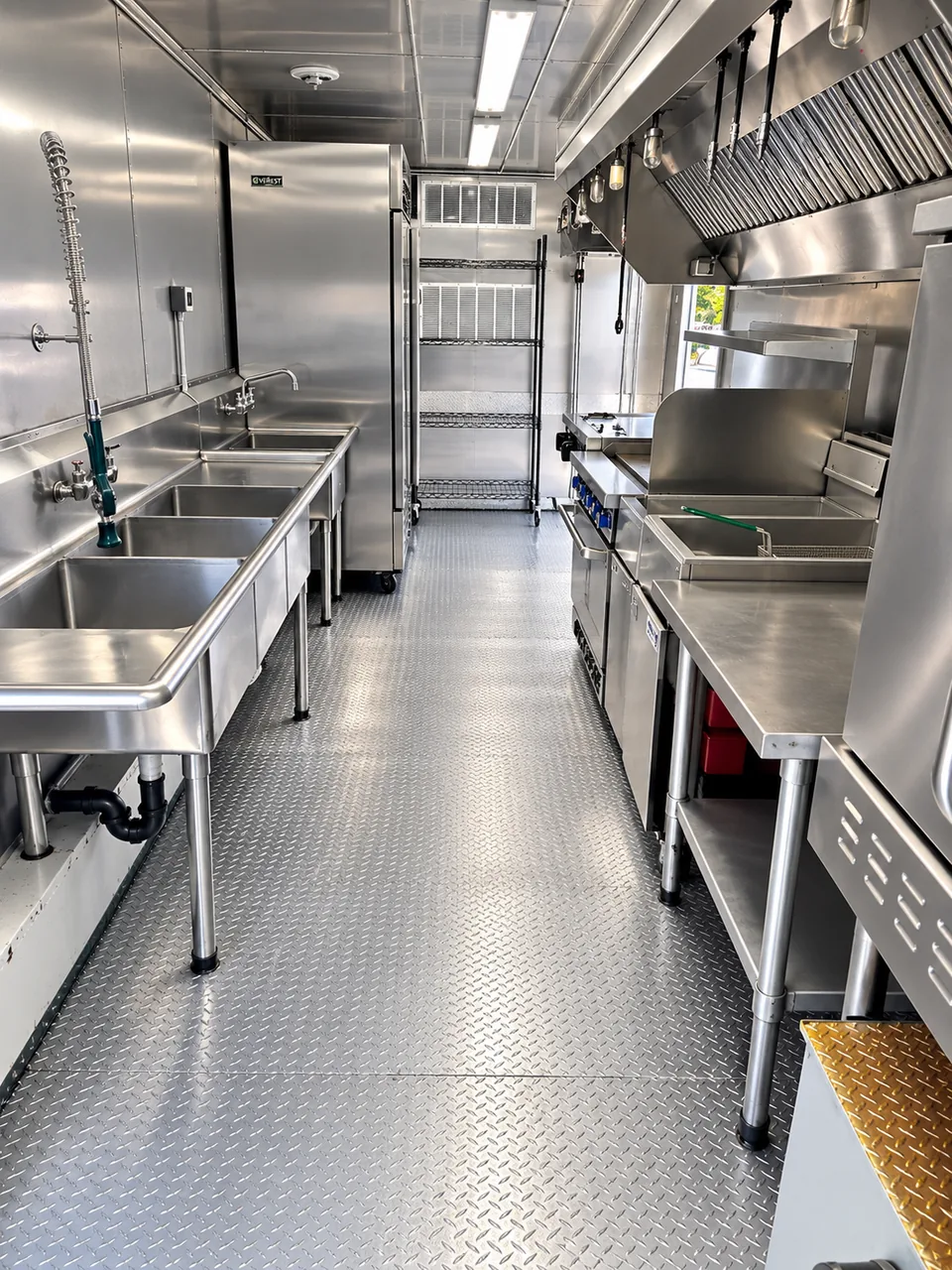
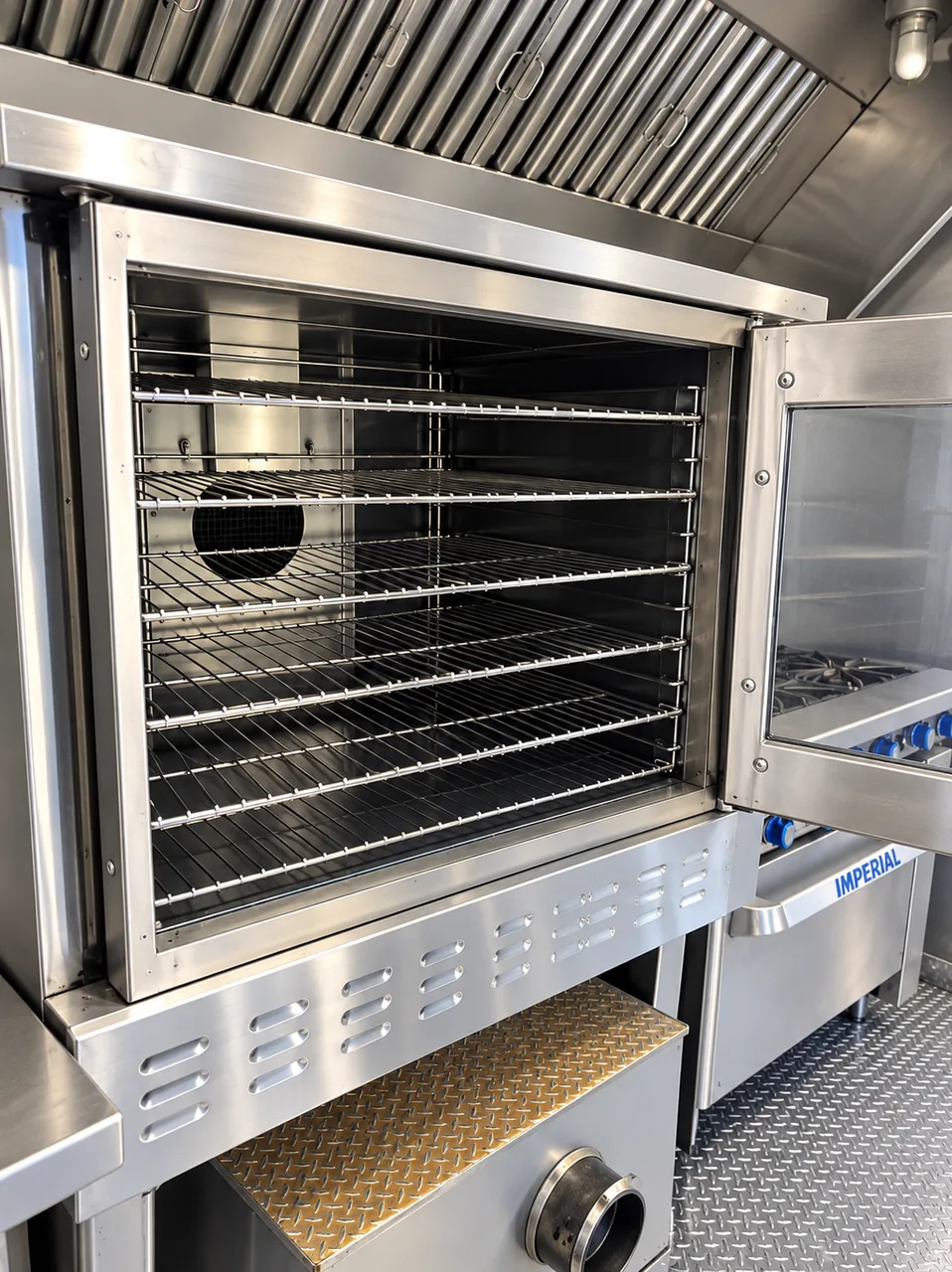
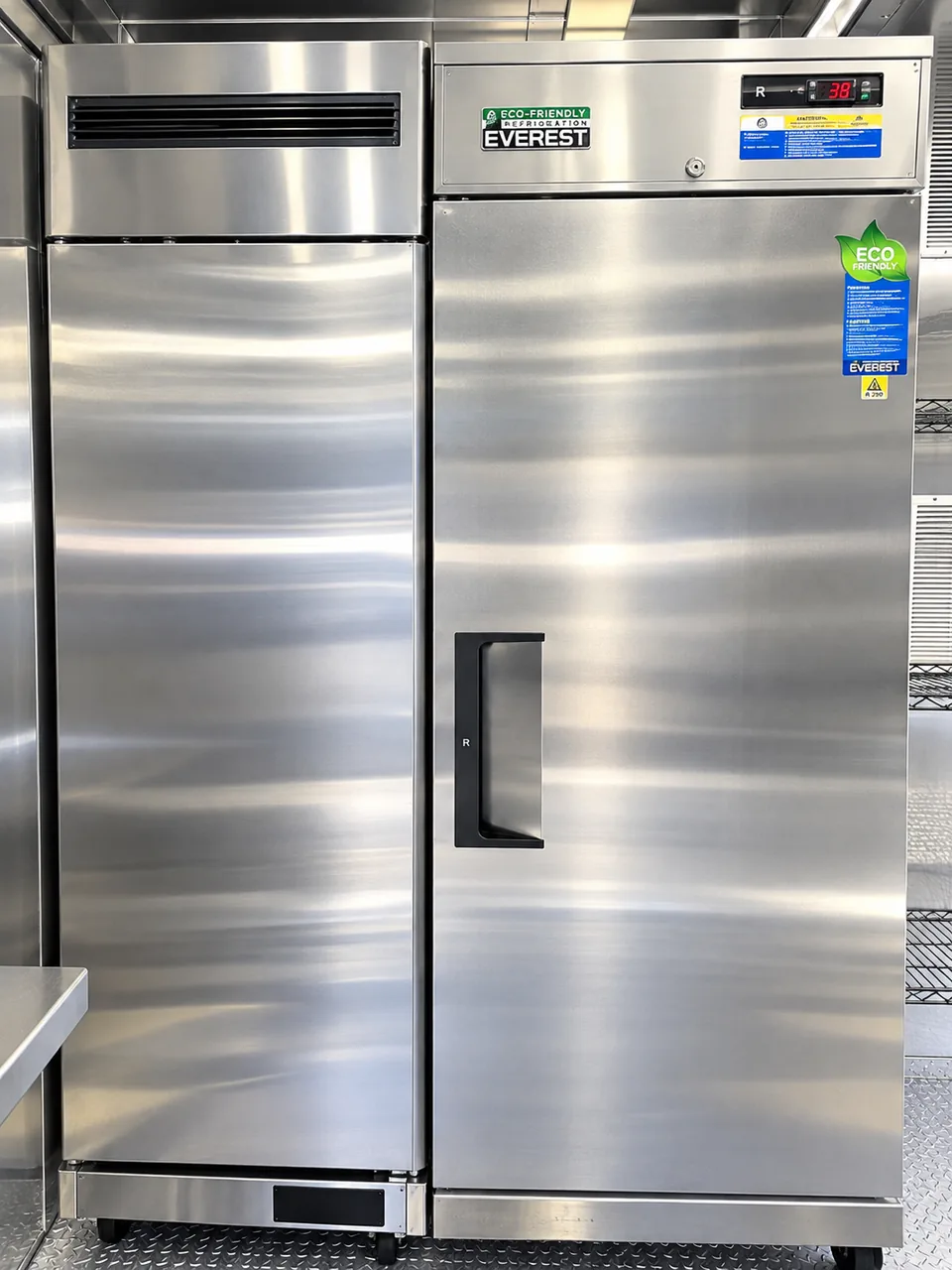
Kitchen equipment reference photos
These photos show equipment examples for planning. They do not document a project at this type of site or confirm that a specific unit is available.
Plan around damaged utilities and supporting equipment
An emergency may affect the power panel, potable water, drainage or loading area that a kitchen trailer would normally use. Describe these conditions at the first call. Ask what utility options are feasible and who would supply, install and maintain any temporary connection or support equipment. A generator, water supply or refrigeration unit should never be assumed available without confirmation.
The menu may need to change while the replacement plan is developed. Focus on essential meals and a safe production process first; add complexity only after the kitchen layout, staffing and deliveries are understood.
Document decisions and plan for a longer repair
Keep a record of damage, decisions, quotes and project dates. If an insurer is involved, ask your broker or adjuster what the specific policy covers and which records they need. Coverage for a temporary kitchen cannot be inferred from a general example or from this guide.
Ask how the rental could be extended if reconstruction takes longer than expected, and how equipment issues would be handled during service. The goal is a workable continuity plan from first meal through return to the permanent kitchen, with actual terms confirmed in the project quote.
Common questions
Does the title mean a kitchen will be operating within 24 hours?
No. It describes first-day planning. Delivery, installation and operating dates depend on availability, access, utilities and required approvals.
What should we have ready for the first call?
Share the exact location, outage cause, site condition, priority meals, available utilities, access details and a facility contact who can coordinate decisions.
Will insurance pay for the trailer?
Coverage depends on your policy and loss. Confirm it with your broker or adjuster and keep project documentation.
Bring the details. We’ll help frame the kitchen trailer request.
Share the location, dates, menu, meal volume, site access and utilities. Ask the team to confirm an available configuration, delivery and project-specific terms.
Prepare a project note ↗